
#28 Daan Koens
"I know how to paint suits from memory, but Miu Miu tops and tiny Jacquemus bags are a different story. I need to do some research first."

Daan Koens decided to pursue his artistic passion at the age of 21 and moved from the Dutch Antilles to Rotterdam for Willem de Kooning. While compiling his portfolio, he developed a deep love for working with oil paint. After three months, he decided to leave the academy and chart his own artistic course. Since then, he has been very active as an artist at various festivals such as Lowlands, where he painted live on stage during Joost Klein's concert.
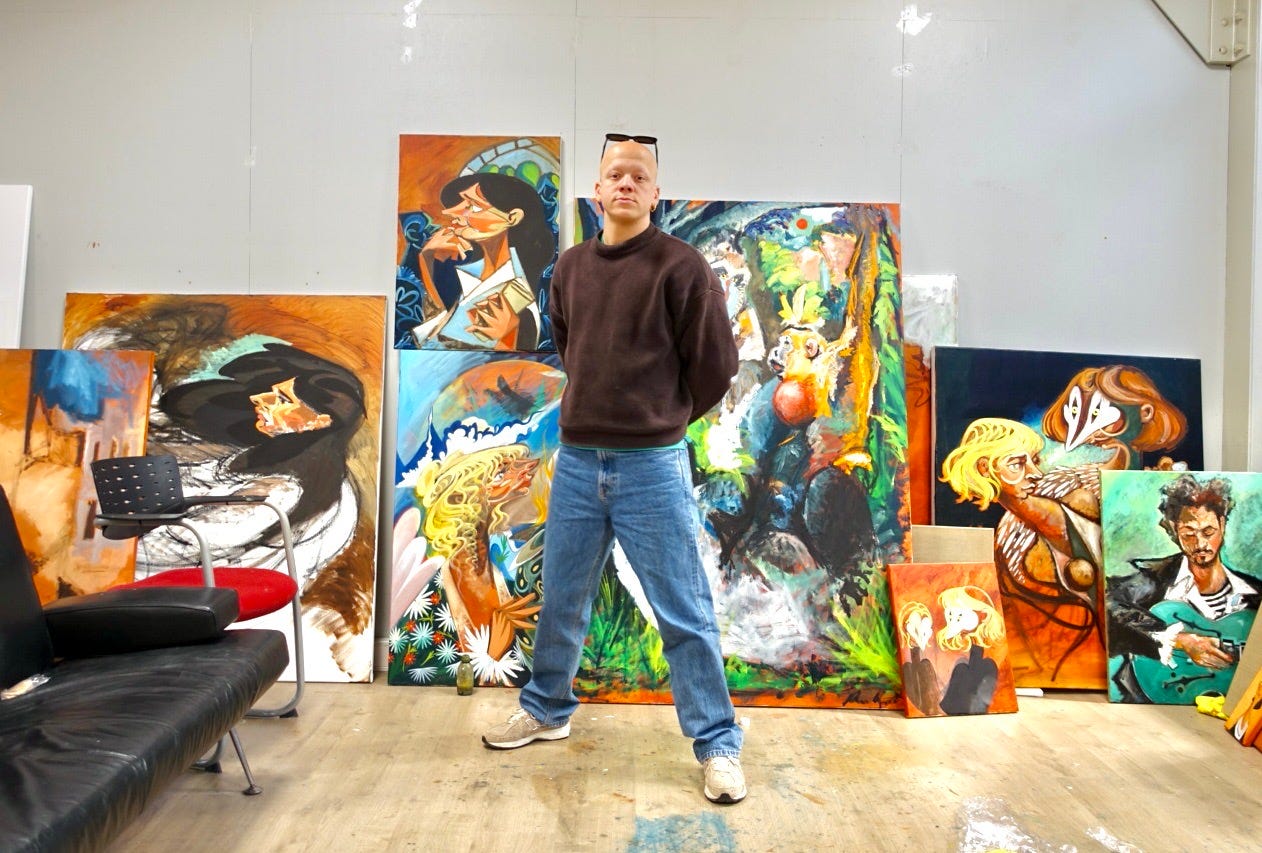
All your paintings have this vibe of party scenes, is that intentional?
"I think it actually came about pretty unconsciously. At first, I was just painting whatever without really thinking about it. But over the past year, I wanted to conceptualize my work a bit more. It's never like I consciously decided at a specific moment to paint about this particular subject. It just grew that way, and there's more of a story to it now. I find that pretty cool."
What's the craziest thing you've experienced while going out?
"I've experienced a lot of crazy stuff, but if I were to keep it somewhat politically correct, I'd say people snorting speed off my head. I really found out what life is about on that day, hahaha."
It feels like the subjects in your paintings come from a different era.
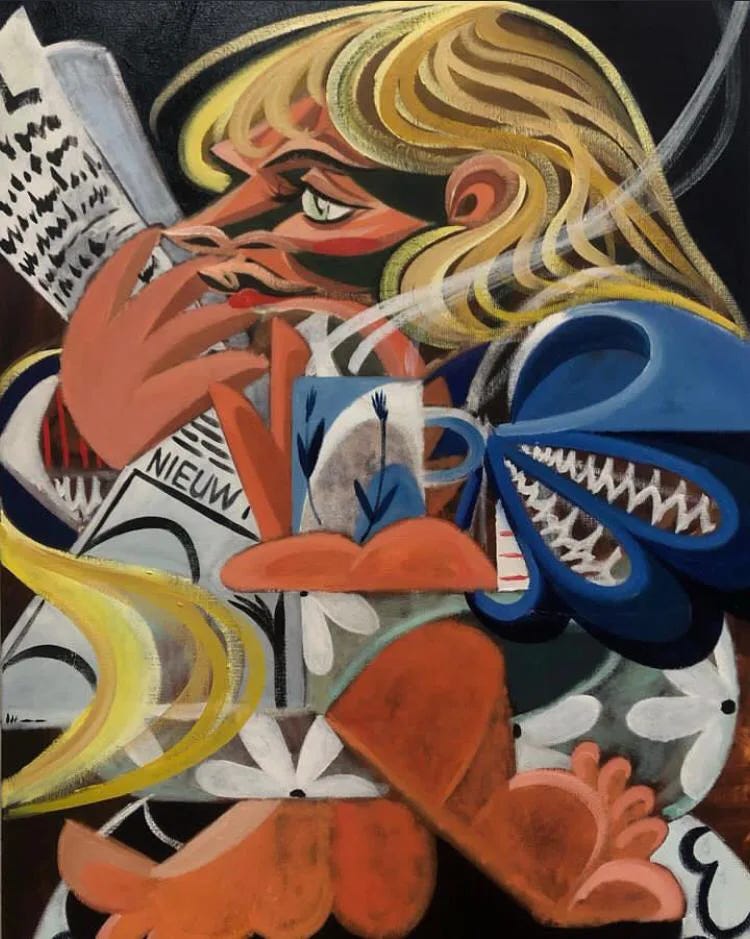
"Yeah, they're kind of decadent people. I actually wanted to paint more “natural wine” types of people in one of my recent paintings, but since I usually paint from my imagination, it was tough. I know how to paint suits from memory, but Miu Miu tops and tiny Jacquemus bags are a different story. I need to do some research first. But the intention is to move in that direction."
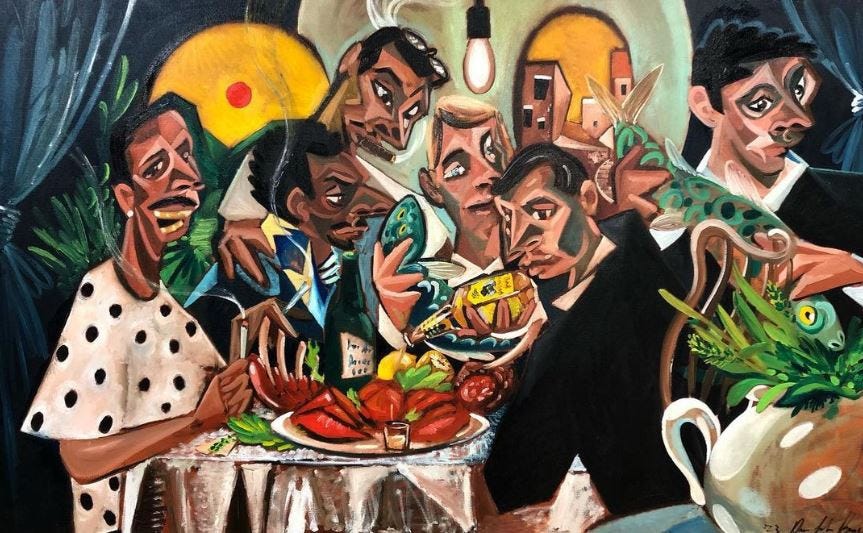
So, you paint very intuitively? How is it then to paint in front of 40,000 people at Lowlands, can you still be intuitive?
"Yeah, I made a small sketch beforehand. Looking back, I felt like the work would have turned out better in the studio, but that's more because of the time pressure I was under. I only had an hour."
Definitely a once in a lifetime opportunity.
"Well, funny enough, they asked me to paint live for Pukkelpop the day after. So twice in a lifetime opportunity, haha."
You dropped out of art school after three months. What advantage do you think you have now as a self-taught artist?
"I think it's cool that you can go your own way from the beginning and focus more on commercializing your work earlier. But looking back, I think it would have been smarter to just finish art school. You make so many contacts there, which really helps. I can't complain about how things are going now, but you definitely get galleries and art fairs less quickly if you haven't done art school."
You told the Stedelijk Museum Schiedam: "By spending all that time with yourself, you encounter certain character traits that, if you think about them longer, can hinder you along the road in life. I'm a master at burning my own bridges. So, my ego hasn't really contributed to maintaining social contacts in the past." How do you experience social interactions with fellow artists now?
"Oh wow, I couldn't recognize myself in that statement anymore, that's really a person from the past. In that respect, I've grown a lot. Now, I actually have a lot of contact with other artists."
Did that happen naturally?
"Not really, I was actively working on it. When you notice something bothering you in life, it's important to consciously seek solutions for it. It's not like everything is laid out in some book, but if you're aware of your own behavioral patterns, you can slowly break them."
How do you experience the art scene here in Rotterdam now?
"It's nice, but I do find it a bit disappointing that there isn't an opening every week like in Amsterdam, where everyone gathers. I miss that here. I would love to be part of an artist community as a creator. That you can come together, like Paris 1910 or something. But that feeling isn't really here. Otherwise, I feel really good here in Rotterdam, but I wish there were more places or events where like-minded people could come together for a bit of 'cross-pollination'. As an artist, you're often working alone; it's not like an office job where you automatically have colleagues. I think it's an important part of life to have colleagues alongside friends and family. With colleagues, you share a certain bond that you otherwise wouldn't have. If you look at Paris and New York, you see how quickly the acceleration in art happens when you gather all like-minded people together."