
#22 Menno Pasveer

Menno Pasveer graduated from the KABK one year ago and just finished his first solo exhibition at Ten Haaf Projects in Amsterdam. Currently, he is preparing for an upcoming solo at MOYA in Oosterhout, where he is in the process of creating 15 new paintings.
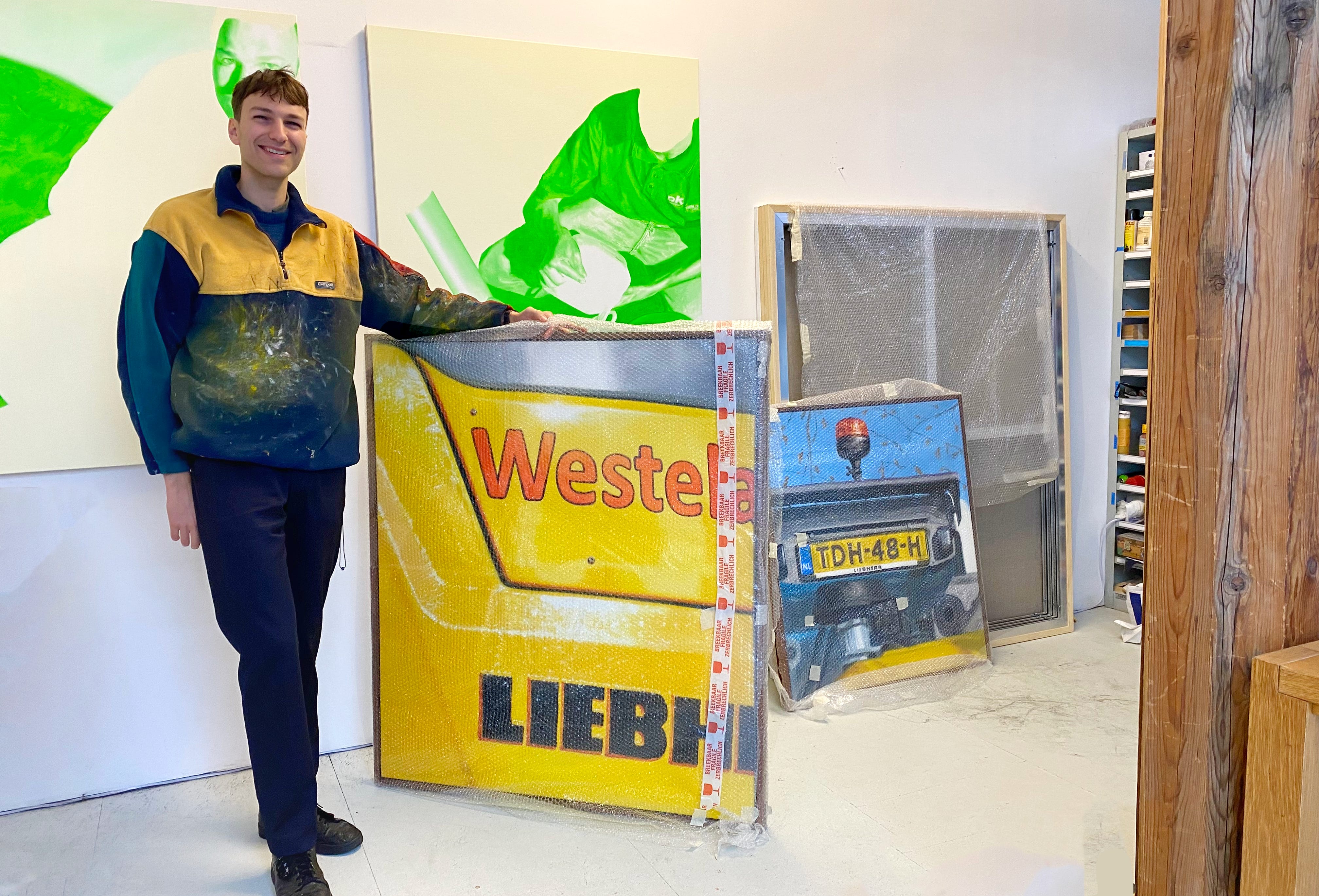
You recently had your first solo exhibition at Ten Haaf Projects. How was that experience, less than a year after your graduation?
"It has been a very good experience, it was such an exciting moment after nine months of painting to finally see your work in one space, all of the paintings communicating together. "
What was it like to have an opening night with all the attention on you and your work?
"On an event like this, all the spotlights are on the artist, which is in all honesty quite nerve-wracking. It might be easy for other artists, althoughI am not so sure. The nice thing about a solo exhibition is that it feels like you are listening to one voice in comparison to some group shows that seem to be sounding like a big choir. And after all, it is an amazing feeling to share the work that you have been doing along with so many friends and colleagues."
What new work did you showcase?
"The show was called 'An Ode to Felling Trees,' a specific term for the profession of cutting down a tree from top to bottom. After graduating, I was searching for a new machine/ a new topic to paint. At that moment there were two men, diligently working high up on a tree in my back garden, sawdust flying around in the blue sky. From that moment, I fell in love.
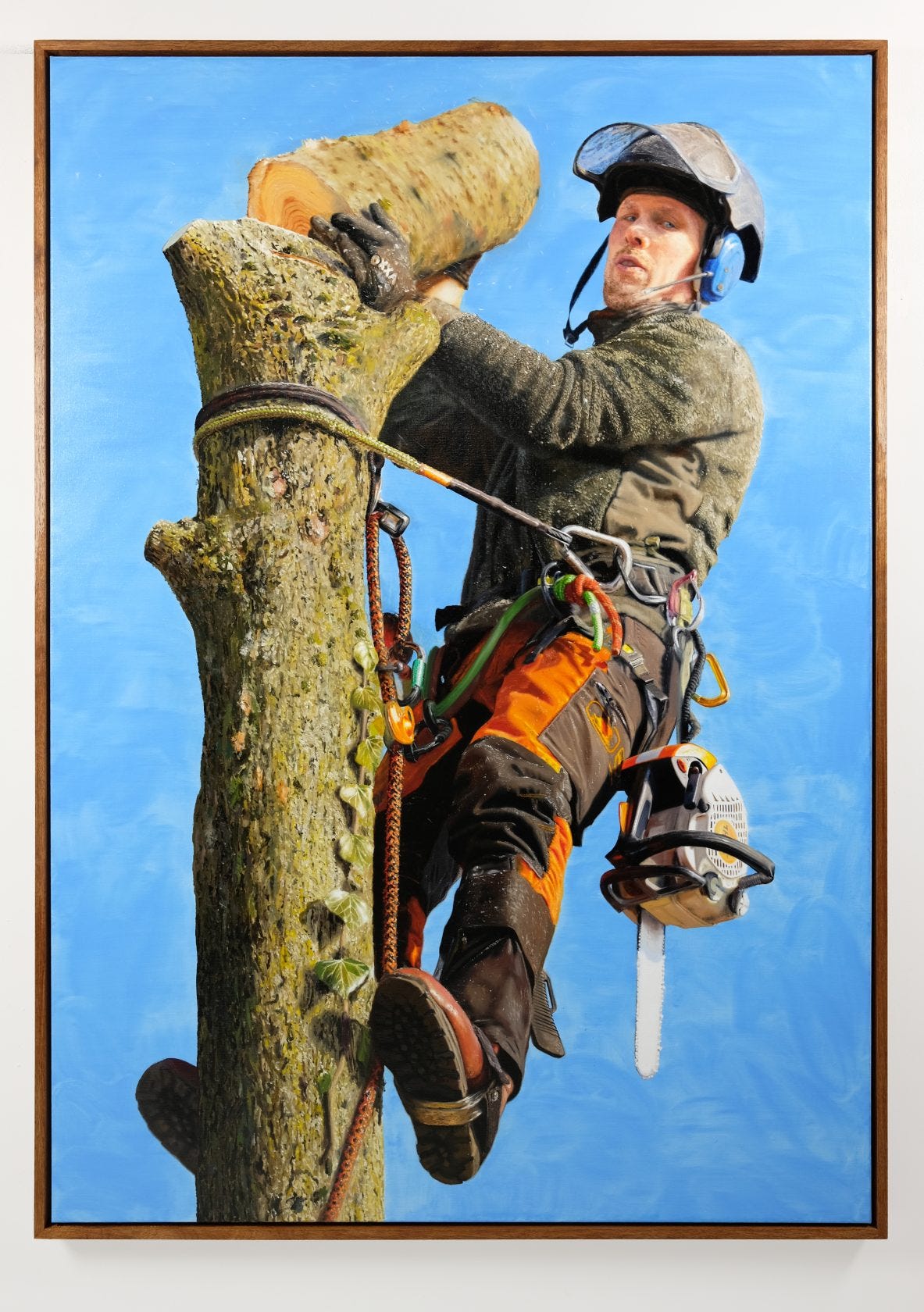
I bought a chainsaw and searched for tree cutters online. I found two young men who were very passionate about their work. I had the opportunity to join them on a job one day and took pictures of their process. As you spend weeks painting a saw on a small canvas, you get to know the object in all its glory—the screws, the blade, the reflection of different types of plastic, the safety guard. This process makes you aware of things that you normally won't see. I believe that that is exactly what painting is about. Also in my new series, 'The Beauty of Daily Life,' I am trying to speak about this. For example, right now I am painting a deep fryer, oil to fry in a plastic jerrycan, and wood glue.
How did your job as a floor cleaner contribute to your first series?
"That first series was an ode to floor cleaning. Without that job, I wouldn't have been able to afford my education and all the materials while studying. I was fifteen when I started that job, as a young boy, my boss and older colleagues shaped my norms and values. While I was searching for the topic to graduate with, that seemed to be the perfect moment to showcase my love and gratitude. While I was always searching for the right topic to paint, I started painting machines and thought, 'Yes, this feels good.' There is a quality in machinery that human beings don't have. You can't interpret a machine as easily as people. We are so well-trained to read human beings in an instant. As the machine works abstracting, the focus lays more on formal aspects of painting, such as technique, the energy of a brushstroke, size, and composition. That is something that I find very exciting, the fact that you can convince someone by the way you paint, rather than what you are speaking about. I really notice around me that there is much emphasis on establishing concepts, especially in academia. Sometimes I find that a bit unfortunate. Although I do understand it in this time of social instability and dissatisfaction. But sometimes I just wish for more ‘damn good painted’ works around me."
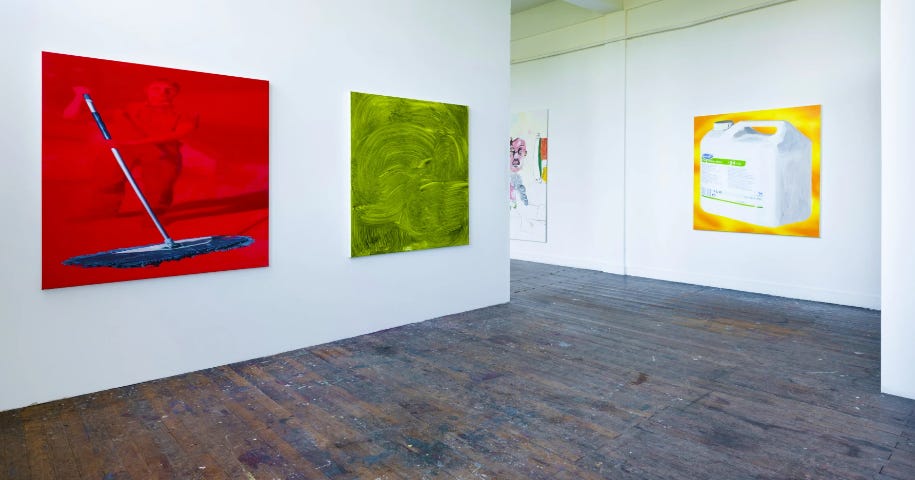
How was life after the academy?
"I felt ready for it. Although the transition from the academy to professional life is significant. The biggest change is that in the academy, you are constantly surrounded by your fellow students, which is fantastic. Then suddenly, after graduation, you're alone in a studio, painting five days a week. I struggled with that initially—how to deal with being by yourself for such a big part of the week. A quote that I find fitting and beautiful by Karel Appel is, 'Loneliness is my greatest friend.' I believe more painters feel this way. There is also something beautiful about being alone in the studio. Sometimes it feels like a romantic movie, dancing in front of the canvases, wearing messy clothing, and the most beautiful music in the background. Sometimes I completely mess up a painting, and I feel like throwing things at the walls. Other times a painting works out just like I imagined, a difficult brushstroke completed perfectly, and I cheer as if I have scored the winning goal in the finals of the World Cup."